Red, White, & Blue
Eileen Myles
An American Poem
I was born in Boston in
1949. I never wanted
this fact to be known, in
fact I've spent the better
half of my adult life
trying to sweep my early
years under the carpet
and have a life that
was clearly just mine
and independent of
the historic fate of
my family. Can you
imagine what it was
like to be one of them,
to be built like them,
to talk like them
to have the benefits
of being born into such
a wealthy and powerful
American family. I went
to the best schools,
had all kinds of tutors
and trainers, traveled
widely, met the famous,
the controversial, and
the not-so-admirable
and I knew from
a very early age that
if there were ever any
possibility of escaping
the collective fate of this famous
Boston family I would
take that route and
I have. I hopped
on an Amtrak to New
York in the early
'70s and I guess
you could say
my hidden years
began. I thought
Well I'll be a poet
.What could be more
foolish and obscure.
I became a lesbian.
Every woman in my
family looks like
a dyke but it's really
stepping off the flag
when you become one.
While holding this ignominious
pose I have seen and
I have learned and
I am beginning to think
there is no escaping
history. A woman I
am currently having
an affair with said
you know you look
like a Kennedy. I felt
the blood rising in my
cheeks. People have
always laughed at
my Boston accent
confusing "large" for
"lodge," "party"
for "potty." But
when this unsuspecting
woman invoked for
the first time my
family name
I knew the jig
was up. Yes, I am,
I am a Kennedy.
My attempts to remain
obscure have not served
me well. Starting as
a humble poet I
quickly climbed to the
top of my profession
assuming a position of
leadership and honor.
It is right that a
woman should call
me out now. Yes,
I am a Kennedy.
And I await
your orders.
You are the New Americans.
The homeless are wandering
the streets of our nation's
greatest city. Homeless
men with AIDS are among
them. Is that right?
That there are no homes
for the homeless, that
there is no free medical
help for these men. And women.
That they get the message
—as they are dying—
that this is not their home?
And how are your
teeth today? Can
you afford to fix them?
How high is your rent?
If art is the highest
and most honest form
of communication of
our times and the young
artist is no longer able
to move here to speak
to her time…Yes, I could,
but that was 15 years ago
and remember—as I must
I am a Kennedy.
Shouldn't we all be Kennedys?
This nation's greatest city
is home of the business-
man and home of the
rich artist. People with
beautiful teeth who are not
on the streets. What shall
we do about this dilemma?
Listen, I have been educated.
I have learned about Western
Civilization. Do you know
what the message of Western
Civilization is? I am alone.
Am I alone tonight?
I don't think so. Am I
the only one with bleeding gums
tonight. Am I the only
homosexual in this room
tonight. Am I the only
one whose friends have
died, are dying now.
And my art can't
be supported until it is
gigantic, bigger than
everyone else's, confirming
the audience's feeling that they are
alone. That they alone
are good, deserved
to buy the tickets
to see this Art.
Are working,
are healthy, should
survive, and are
normal. Are you
normal tonight? Everyone
here, are we all normal.
It is not normal for
me to be a Kennedy.
But I am no longer
ashamed, no longer
alone. I am not
alone tonight because
we are all Kennedys.
And I am your President.
Eileen Myles, "An American Poem" from Not Me, published by Semiotext(e). Copyright © 1991 by Eileen Myles. Reprinted by permission of Eileen Myles.
Do you value the examination of the political in poetry? If so, what experience(s) taught you its importance?
I think I learned from observing, when I was young, the impact of my friend Allen Ginsberg that poetry both propelled a poet to a unique kind of prominence by virally charging the culture around him/her by the skill of their assertion of not even necessarily "the political" but by describing in their work (and their life) what was urgent to him or her and through that finding out pretty quickly how supremely political that action was and is. I didn't think I had access to the political in my own work for quite a while. It was there but it wasn't really a force. When I did write such a poem, when the poem and myself began to stand in a new world because of the action of the poem I saw the power of language like I never had before. And I only wanted to repeat the experience. I think poetry is always political but when you've really stepped in it you know it because the world moves around you in a way.
If you write about politics frequently, what issues, difficulties, advantages and disadvantages do you negotiate? Which poets do you draw on when conducting such negotiations?
Not everyone will like it, publish it, reward you. But you will find out very quickly what you're culture is. And it will keep coming as long as you put it out. I draw on everyone. Allen, of course, and Lucille Clifton, and Hart Crane. And James Schuyler. Work that I feel is political is not necessarily work that clocks you over the head with it. I mean I like that too. Amiri Baraka. Judy Grahn. Walt Whitman.
What 'responsibility' does an artist have to artistically engage his or her own politic?
I think you're talking about being responsive. I pray to always be responsive but I often fail. I think it's part of being an organism, this responsiveness. It's not an edict from the outside. People obviously duck shit in their lives and their work but I think by and large people are responsible. We might just not like how they respond. Or what they are responding to.
In 2008, Horace Engdahl, the secretary of the Nobel prize jury, wagged his finger at American writing saying that "[American writers] don't really participate in the big dialogue of literature. […] That ignorance is restraining." What do you think? How have recent American poets engaged with or neglected the so-called 'big dialogue' of literature? Is this 'big dialogue' a political one?
He doesn't know what it's like to be American. We'd like him to tap his friends in the other department to give Bradley Manning the Nobel peace prize. Then he can talk about us. He should help us first. Then he can talk.
Is there room for romantic or rugged individualism in political poetry (as opposed to a capacious perspective of Whitman or other past poets)? If so, where is its place?
Oh I think these two are conflated.The romantic and the capacious. Whitman and the rugged individual. I think there's always a place for everything. It's like looking for an audience. I think of Martin Luther King's line: there is no right time. There's also no right place. So we must move around and find it or else do something else.
Where do you draw the line between poetry and propaganda? What is the purpose of such a line? Should today's poet be concerned with editorial censorship?
I think one person's propaganda is another's poem. it's an impossible line. It's a social one and there's so many societies. I think the purpose of the line is censorship. I think we're tremendously affected by what people don't want to hear. And I think our power is inherently displayed in the choices we make around that. I mean you have to pick your battles. I love to say things about other poets and work I hate and I love to tout the work of those I love - for their work. But sometimes I think, or increasingly that in this climate we have bigger fish to fry. I think post-literary might be the way to go. To be writing for larger worlds with larger struggles. So that infighting and branding and ambition aren't flavoring all your utterances. Propaganda against the proper enemy is probably exactly the poem I'd like to write. But it still might be a very subtle thing. Very quiet and small. I always think of this poem that James Schuyler wrote when Ted Bundy was put to death. He described a tree in a landscape that was struck by lightning and he dropped the line "may god forgive them" in the poem. He said that originally he made it very clear who or what the poem was about but finally he took that out. I think it's a stunningly political poem for merging the fate of a man and a tree. It's monumental political poetry. I don't think I'm just being perverse nor was he.
What are your thoughts on shifts in the state of the political voice in contemporary poetry, from the early modernist to the beat poets and black arts movement, to today? Where are we now? Where are we going?
I think people are hungry to be heard. I think poems are increasingly ads for discontent and should be. We are calling out for help.
Hey and by the way...there is a OWS poetry anthology that needs support in order to get published. Here's the link. Help them!
* * *
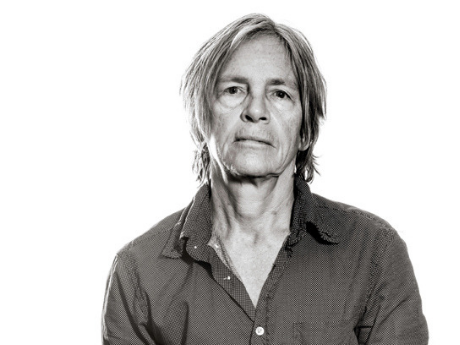
Eileen Myles was born in Cambridge, Mass. in 1949 and moved to New York in 1974 to be a poet. She has published more than twenty collections of poetry, fiction, and nonfiction, plays and libretti including Sorry, Tree, Chelsea Girls, Not Me, Skies, The New Fuck You/adventures in lesbian reading, Cool for You, The Importance of Being Iceland: Travel Essays in Art, for which she received a Creative Capital/Warhol Foundation art writers grant, Inferno (A Poet's Novel) which won a Lambda Book Award and most recently Snowflake / different streets (Wave Books, 2012). She's a 2009 recipient of the Shelley Prize from the Poetry Society of America.
Published September 2012