Features

Old School

On The Song of Roland

One of the striking fates of poetry over the last century has been the conflation of poem with lyric. But some of the most important poems for me have always been non-lyric genres: epigram; epistle; lais; 17th-Century French drama; et cetera

Read Article

 
line

On Samuel Taylor Coleridge's Biographica Literaria

To this nineteen-year-old in the 1960's, the discovery of Biographica Literaria was like landing on the moon: I stood shakily on new ground in a place I discovered had been giving me light for the five or six years I had been writing poems. Though I could not have formulated it quite yet since I only experienced my discovery as a sort of frisson Coleridge was giving me a way to think about the creative process.

Read Article

 
line

On Sir Thomas Wyatt's "Epigram XLI"

I first became familiar with Sir Thomas Wyatt's "Epigram XLI" from Jacqueline Osherow's essay on ottava rima in An Exaltation of Forms: Contemporary Poets Celebrate the Diversity of Their Art (ed. Annie Finch & Kathrine Varnes, U of Michigan P). I have been using this book for the last several years as a text for my Craft of Poetry course for the Whidbey Writers Workshop MFA Program

Read Article

 
line

On Christopher Smart's "Jubilate Agno, Fragment B"

I always think of the "tesseract" in A Wrinkle in Time when I consider the power of a truly original piece of writing. The tesseract, in case you don't remember, is a kind of fifth-dimension occurrence that folds time and space, leading different times and spaces to touch the way the fabric of a skirt touches when it folds on itself. Certain poems, I often think, are tesseracts—so singular that they seem to exist in multiple times at once, transporting us outside our own interiority, our era, our personal history. 

Read Article

 
line

On Anonymous

Poetry came into my life before I could hold it in my mind, or turn it over with a thought or a prayer. Poetry came into my life as sound, and that sound was orchestrated by a children's poet, also an anthologist, who served as Poet-in-the-Schools for my district: Myra Cohn Livingston.

Read Article

 
line

George Herbert

Isaak Walton's The Life of Mr George Herbert opens by telling us, "George Herbert was born the third day of April, in the year of our redemption 1593." But the priest-poet had few readers until three centuries after that date. During his lifetime he never published a book, and it is only because Herbert placed the manuscript of The Temple in the hands of a friend that we know of his poems at all.

Read Article

 
line

On Percy Bysshe Shelley's "Evening, Ponte Al Mare, Pisa"

I love Shelley. I have a tattoo of the sketch he made for his boat, in which he soon after drowned. But like many of us who love Shelley, I do not love all of his poems. There are many Shelleys. And I like a lot of them, but life is too short (he would know) to read another verse drama.

Read Article

 
line

On Yu Xuanji's "To Wen Feiqing On a Winter’s Night"

Yu Xuanji, a courtesan and female poet, wrote during the Tang Dynasty which was also considered the golden age for art and literature in China. She is still, in many ways, a mysterious figure as she lived her life as a concubine, wife, a Daoist "nun," and as a resident of Chang'an's pleasure district. 

Read Article

 
line

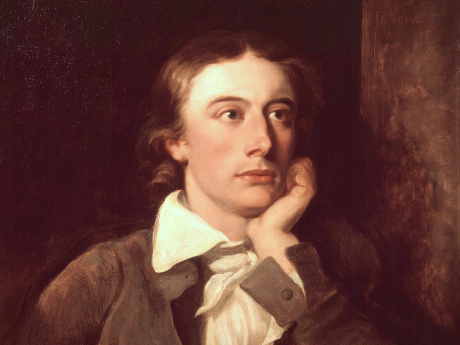
On John Keats's "This living hand"

I was just starting out when I stumbled upon John Keats's last serious gesture in poetry, the final fragment, a terminal point. I felt the blood in his hand, the trauma of what could never be finished, the lure of the partially whole, and it has reminded me ever since that poetry is a bloody art. It's a form of play, true, but the stakes are mortal. Everything is on the line.

Read Article